Push Notification Benchmarks: What Engagement Really Looks Like by Industry
(and What It Means for Your Digital Business Card)
In a world where first impressions happen in seconds, push notifications are the tiny taps on the shoulder that either move people to act—or get ignored with a swipe.
Paper business cards can’t tap anyone on the shoulder. They can’t follow up, remind, or re-engage. They just sit in drawers and trash cans.
Progressive Web Apps (PWAs) can.
That’s why I’m obsessed with pairing a digital business card PWA (like The WOWECard) with a smart, benchmark-driven push notification strategy.
In this report-style post, I’ll walk you through:
- What real push notification engagement looks like today
- How benchmarks differ by industry (retail/e-commerce, restaurants, travel, finance, media, etc.)
- How to translate those numbers into a scan-to-action system using a PWA digital business card
1. The Baseline: What Counts As “Good” Push Engagement?
First, a reality check: push notification metrics vary a lot depending on who you ask and how they measure “opens” and “clicks.”
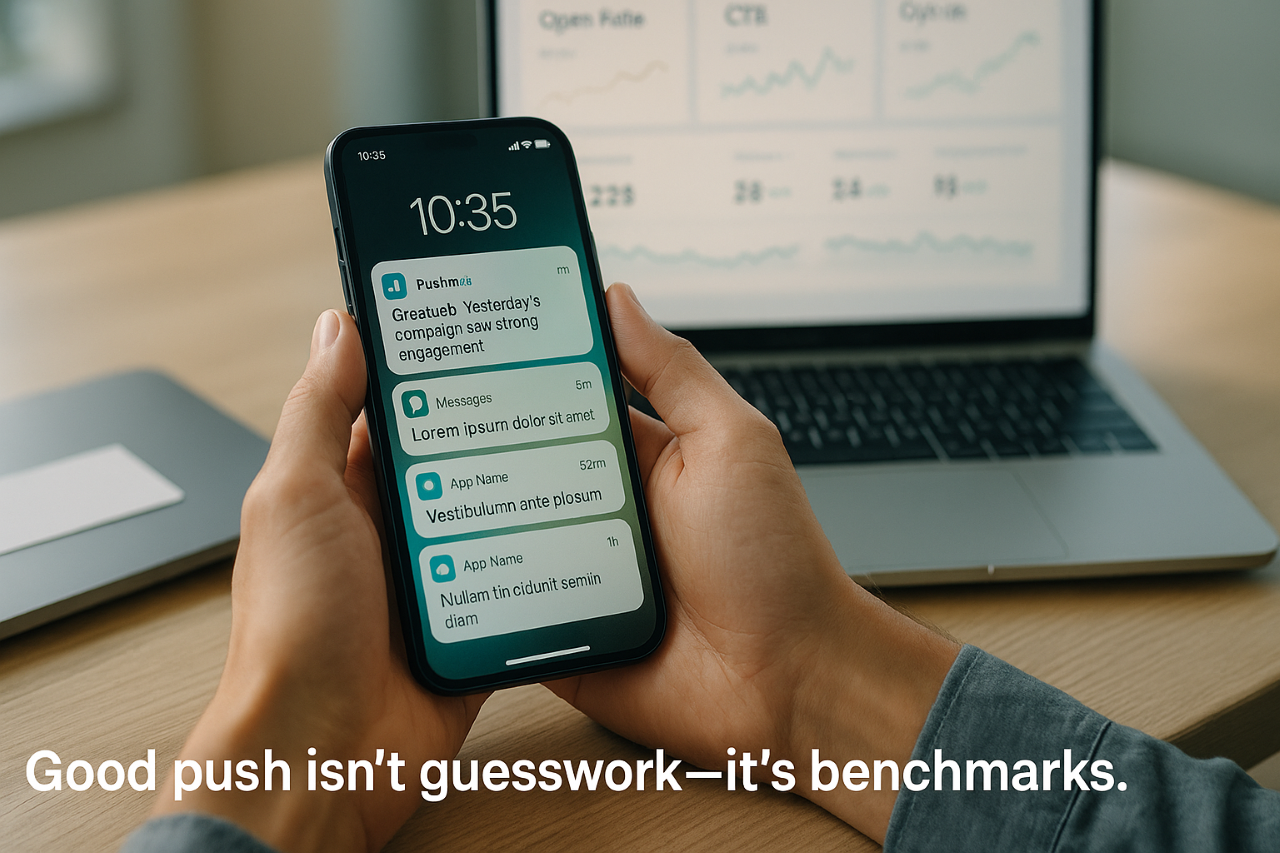 Some platforms consider a notification “opened” when the user taps it. Others when it’s expanded on the lock screen. That’s why you’ll see wildly different averages:
- One widely cited study puts average push open rate around 20% across 22 brands in multiple industries. Travel and food & beverage performed best, while fitness, motor, and home décor lagged behind. (MobiLoud)
- Customer.io, using its own platform data, sees an average open rate closer to 4% – and calls that completely normal for push. (customer.io)
- When you look at click or reaction rates (actual taps), Airship’s large-scale analysis of billions of notifications found an average reaction rate of about 7.8% overall, with Android at ~10.7% and iOS around 4.9%. (MobiLoud)
So, what’s “good”? The pattern is:
- Opt-in rate – how many people allow notifications in the first place.
- Reaction / click rate – how many people tap a notification.
- Contextual vs generic – targeted, relevant pushes dramatically outperform broadcasts.
For example, CleverTap reports contextual campaigns seeing open rates around 16.3% compared to 4.7% for generic blasts. (CleverTap) Another study found contextual campaigns achieving opens above 14% while generic ones hovered just over 4%. (Batch)
The takeaway for you: don’t compare your numbers to a single global “average”; compare them to your vertical and your campaign type.
2. Industry Benchmarks: Who’s Winning With Push?
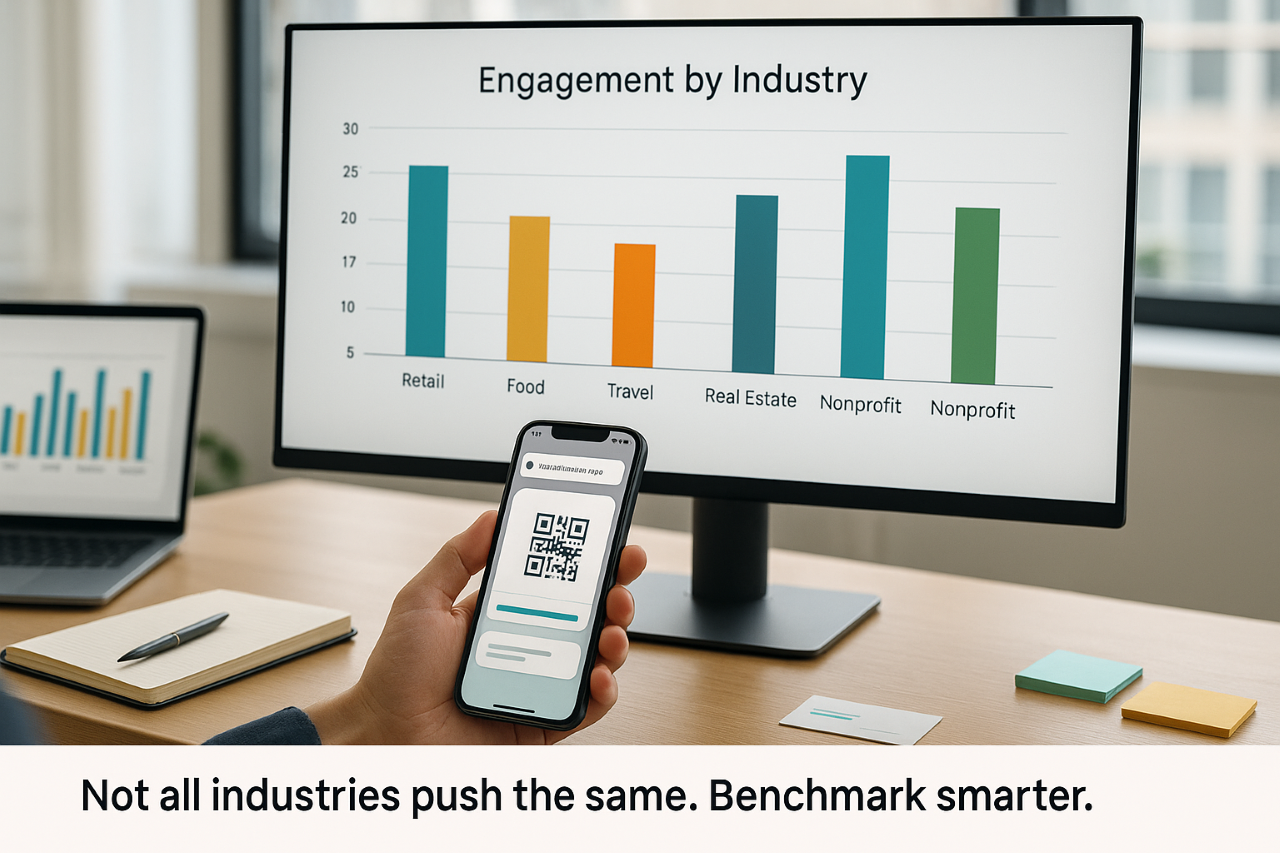 Let’s zoom in on the industries that matter most for WOWECard users: e-commerce brands, restaurants, small businesses and startups, car dealerships, leasing offices, non-profits, realtors, and corporate teams.
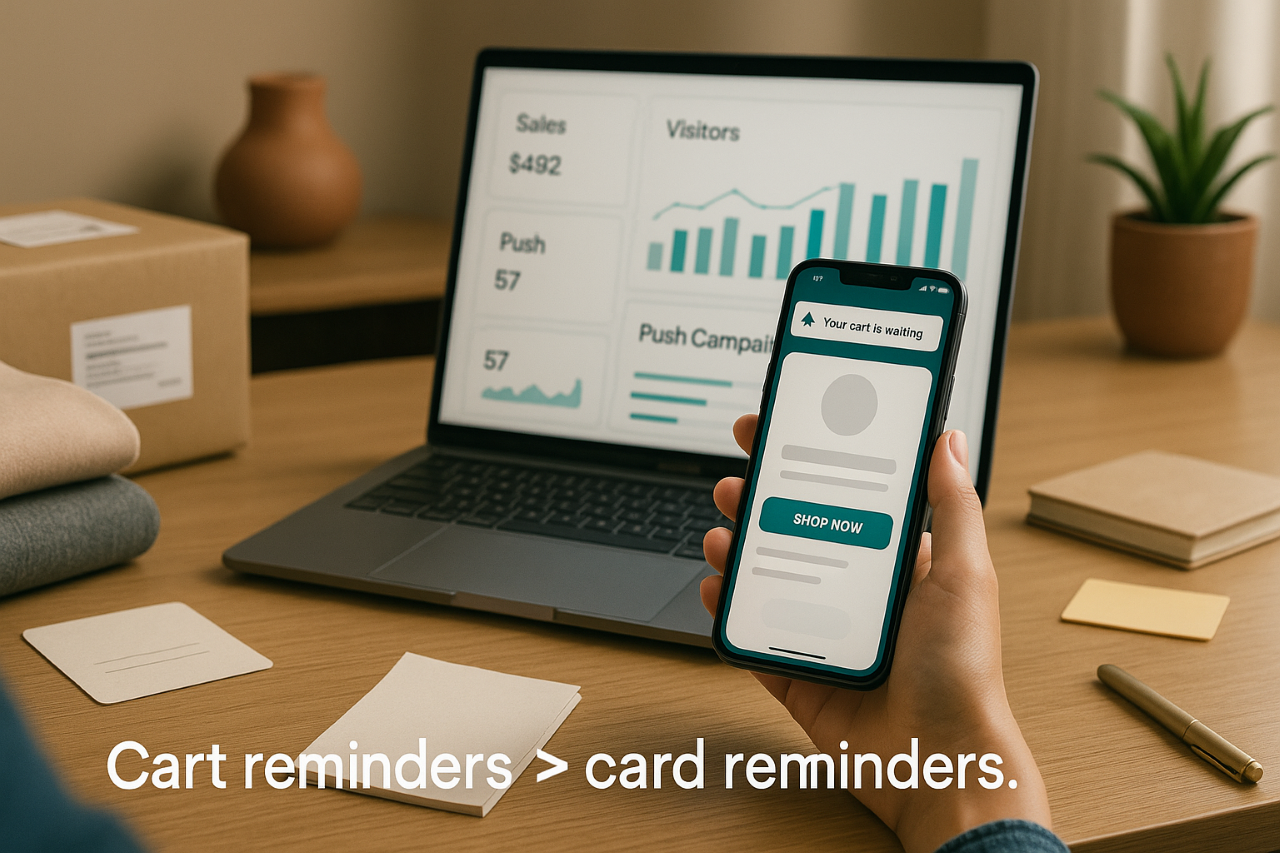 E-commerce & retail
- E-commerce apps have opt-in rates around 68%, meaning roughly two-thirds of users allow notifications. (MobiLoud)
- In retail, broad “broadcast” push campaigns tend to see modest click-through rates: about 1.3% CTR at the top end in recent data. (EMARKETER)
- Web push data shows average browser push CTR around 0.84% overall—but automated, behavior-based campaigns (cart abandonment, recently viewed, etc.) jump to 5–8%+ CTR. (pushpushgo.com)
What this means for your digital business card:
If a customer installs your WOWECard from a QR scan at an event, you shouldn’t expect every push to “crush it.” A generic promo blast might only convert 1–2% of your opt-ins—but triggered flows (abandoned cart reminders, “we saved your quote,” “your design is ready”) can perform 5–10x better.
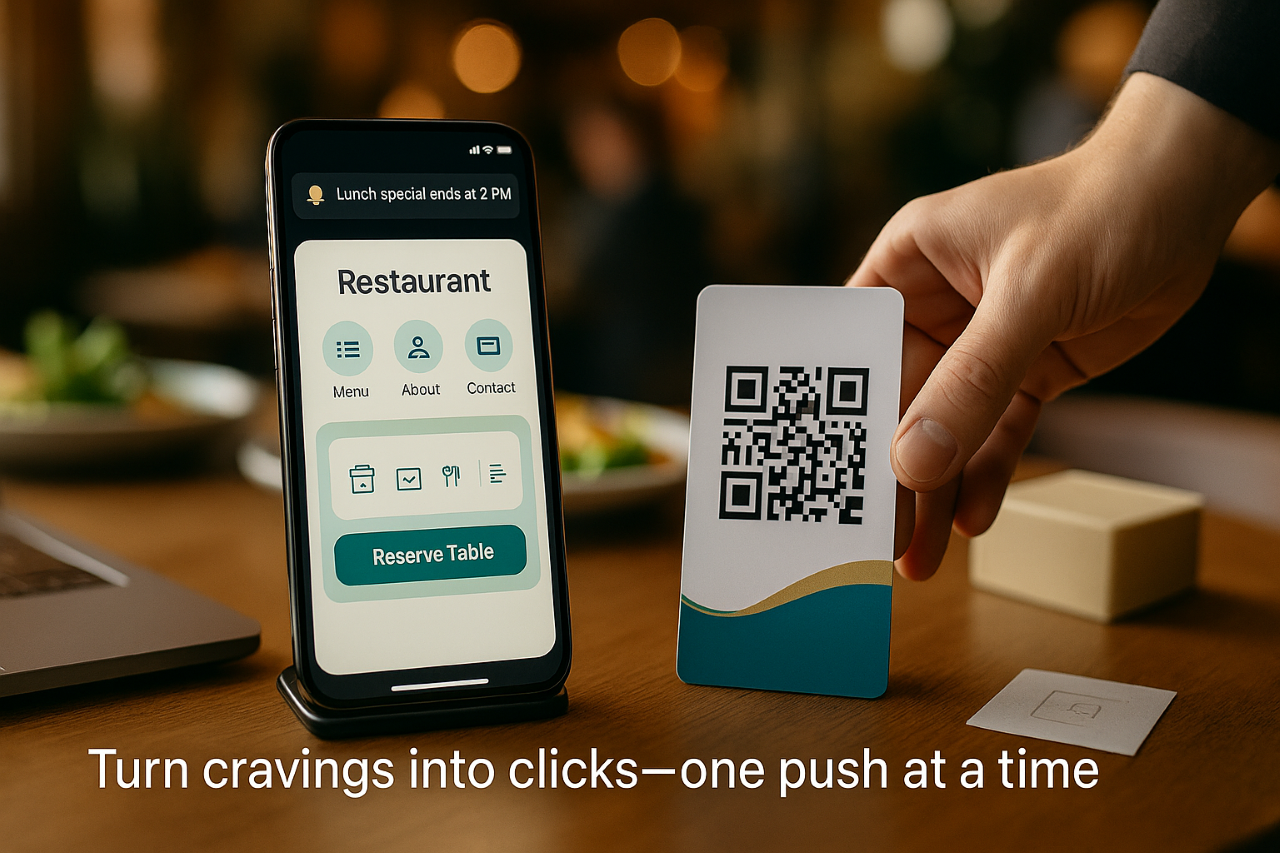 Restaurants, food & drink
- In OneSignal’s benchmark data, food & drink apps see opt-in rates around 32.8% on Android and 40% on iOS. (OneSignal)
- Separate research shows that, across industries, travel and food & beverage sit at the top of the pack for open rates compared to other verticals. (MobiLoud)
Implication:
People want timely, location-relevant, appetite-driven notifications: lunch specials, reservation reminders, limited-time offers. A restaurant using a WOWECard PWA can turn every “Hey, scan my card” moment into an ongoing, permission-based channel.
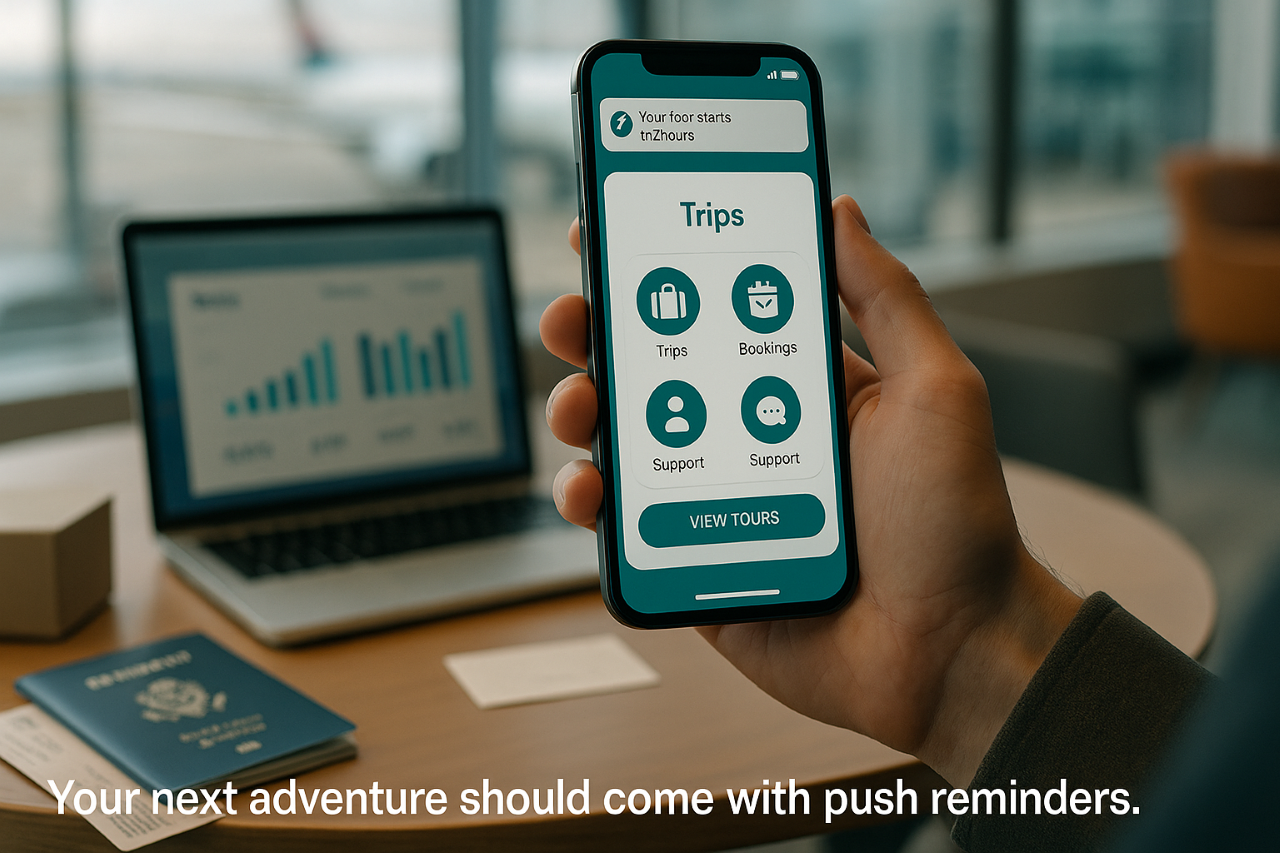 Travel, hospitality & experiences
- Travel apps often see opt-in rates above 70%. (MobiLoud)
- In retail vs travel, data shows broadcast push CTR around 1.7–1.8% in travel and hospitality—slightly higher than retail. (EMARKETER)
Travel, tours, events, and experiences are time-sensitive. That makes push perfect for:
- “Your tour starts in 2 hours—tap for directions.”
- “Price drop on your saved trip.”
- “New dates just released for your favorite experience.”
When your travel brand uses a WOWECard, your card isn’t just contact info; it’s a trip companion app that can send these nudges after a simple QR scan and home-screen install.
Finance, insurance & big-ticket purchases (car dealerships, real estate)
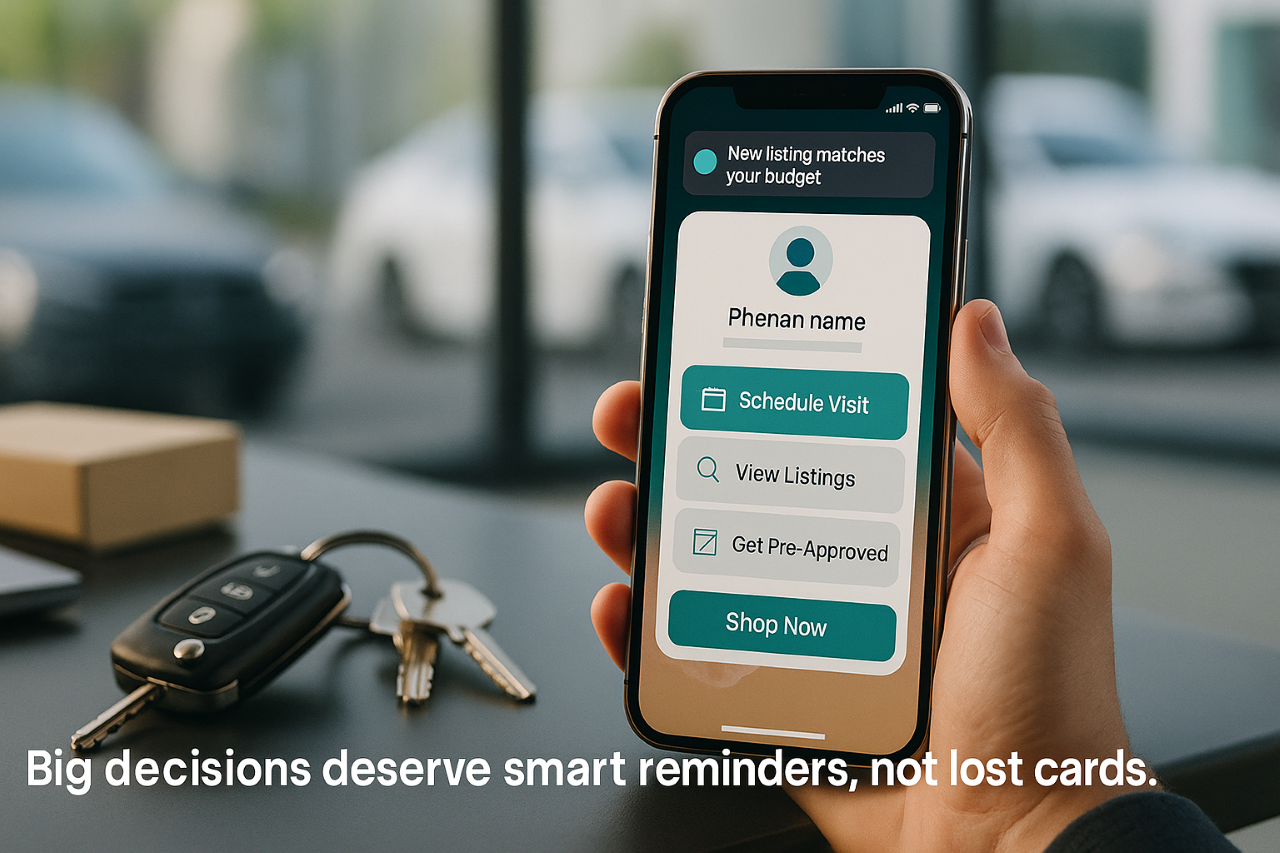 Financial push behavior is interesting:
- Finance apps enjoy high opt-in rates—around 72% in some benchmark summaries. (MobiLoud)
- Fintech apps measured by Pushwoosh see CTRs around 2.84% on Android and 2.09% on iOS, higher than the all-industry average. (pushwoosh.com)
For car dealerships and realtors, the dynamic is similar to finance: these are considered purchases with longer decision cycles.
Push shines when you:
- Notify leads about price drops or rate changes
- Remind them their test drive or property tour is upcoming
- Alert them to a new listing or fresh inventory that matches their preferences
With a WOWECard PWA, your salesperson’s “business card” can quietly keep leads warm with these high-intent notifications, instead of hoping they find a paper card in a glove compartment.
Media, publishers, nonprofits and community brands
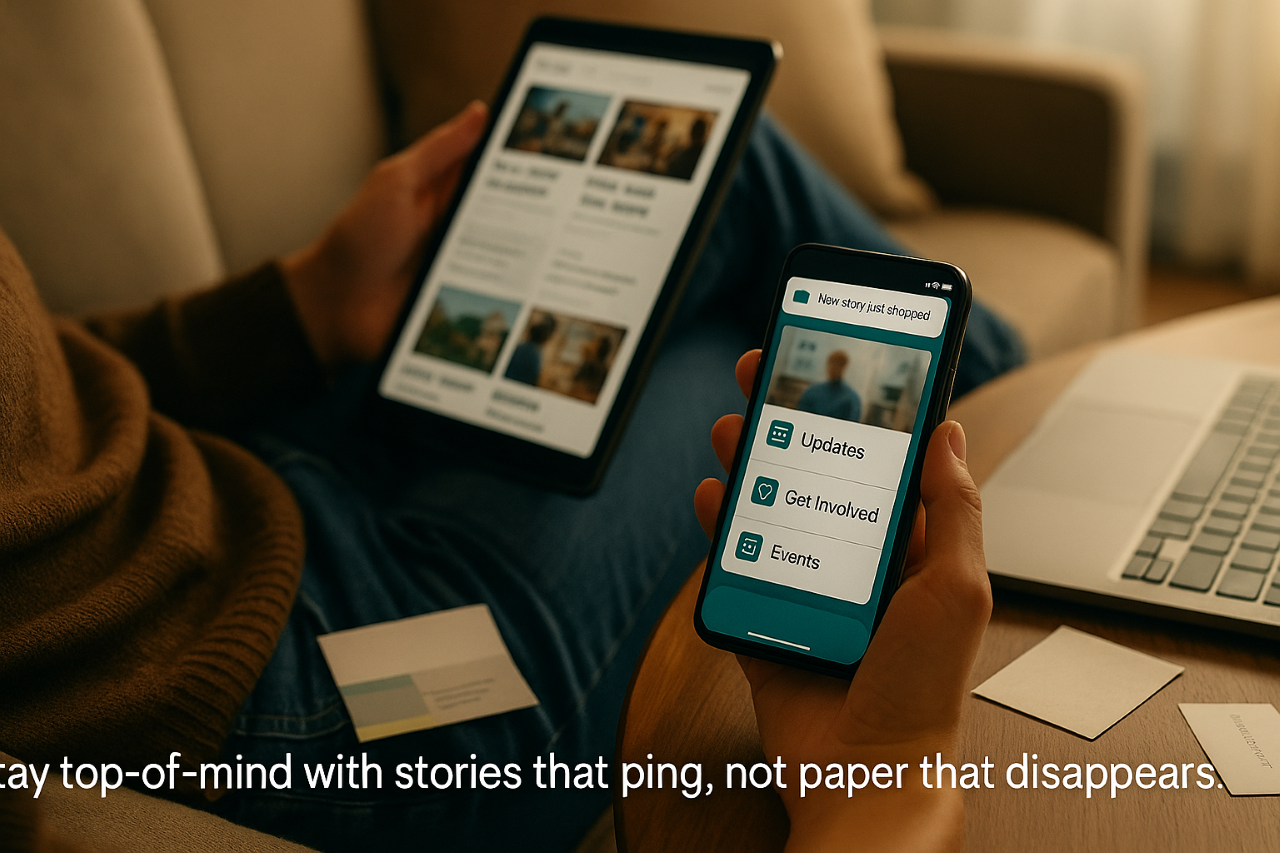
- Media and gaming apps sit at the lower end of opt-in rates (around 63–64%), but when publishers tune their strategy, push can be incredibly powerful—for example, one mobile publishing report showed a 60% increase in active users over three months after optimizing push campaigns. (MobiLoud)
- Airship’s benchmarks span verticals like charities, foundations, and nonprofits, education, media, retail, food & beverage, and more, and show reaction rates clustering in the mid-single to low-double digits depending on vertical and platform. (Airship)
Non-profits, churches, and community organizations can use push to:
- Remind supporters of events and volunteer shifts
- Send impact updates after donations
- Nudge people to finish a pledge or register
A WOWECard PWA in this context becomes a living “ministry card” or “donor hub,” not just a static name and phone number.
3. What High-Performing Push Programs Do Differently
Across industries, the same pattern repeats:
Generic blasts underperform. Contextual, personalized, event-based pushes win.
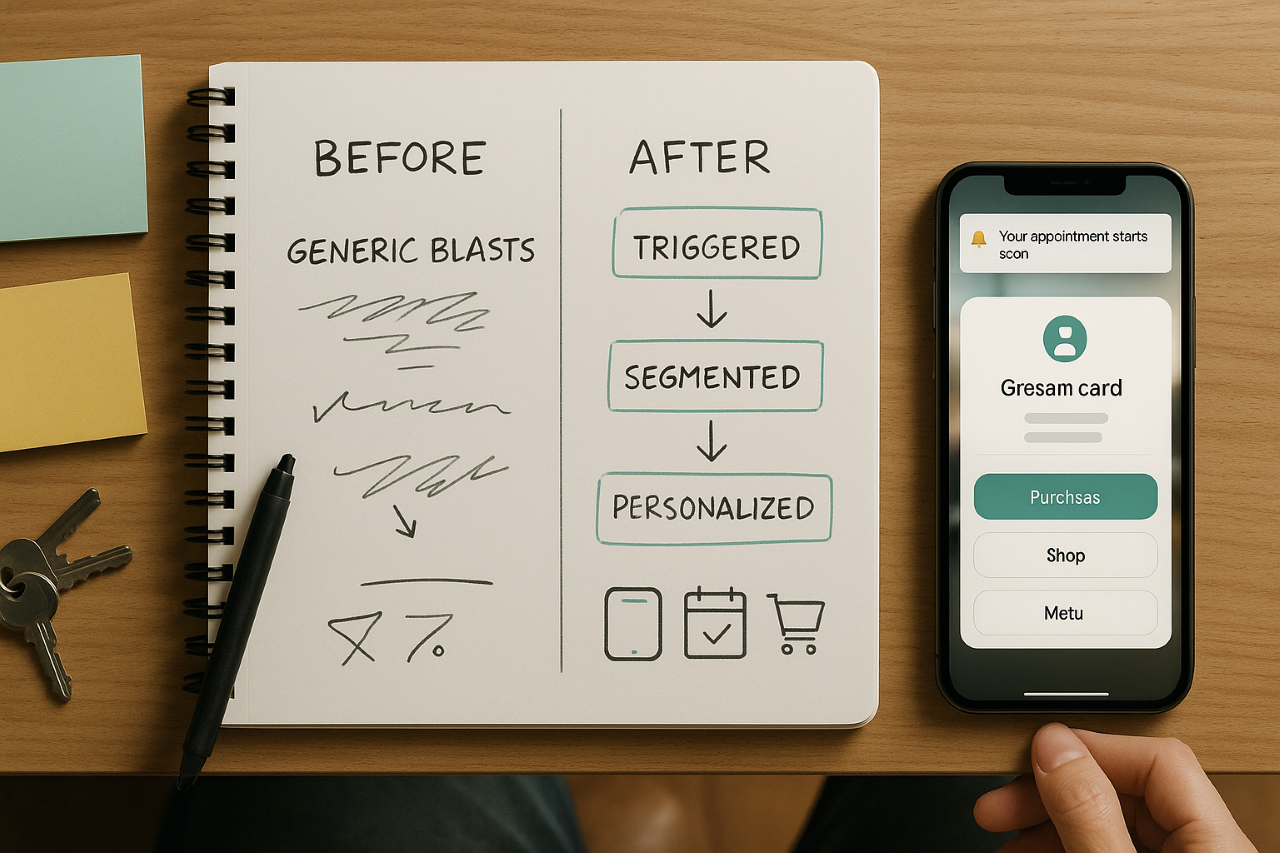 Some key findings:
- Contextual campaigns get 3–4x higher open rates than generic campaigns. (CleverTap)
- Personalized notifications (using user behavior, language, and location) can see over 3x higher engagement than non-personalized ones. (Business Wire)
- Brands that combine channels—push plus in-app plus email—see engagement lift by roughly 37%, along with better short- and long-term retention. (pugpig.com)
For your digital business card, this means:
1. Don’t send the same push to everyone.
Segment by what they scanned or asked for: menu, pricing, availability, specific listing, membership info.
2. Tie every push to a concrete next step.
Book a table. Schedule a test drive. RSVP to an event. Claim an offer. Visit your store PWA.
3. Use the card as the hub, not just the start.
The WOWECard can host video, clickable CTAs, booking calendars, and social links. Push is the thread that pulls people back into that hub at the right time.
4. Turning Benchmarks Into A Scan-To-Action System With WOWECard
Let’s make this practical for a few of your key audiences.
For e-commerce brands & small retailers
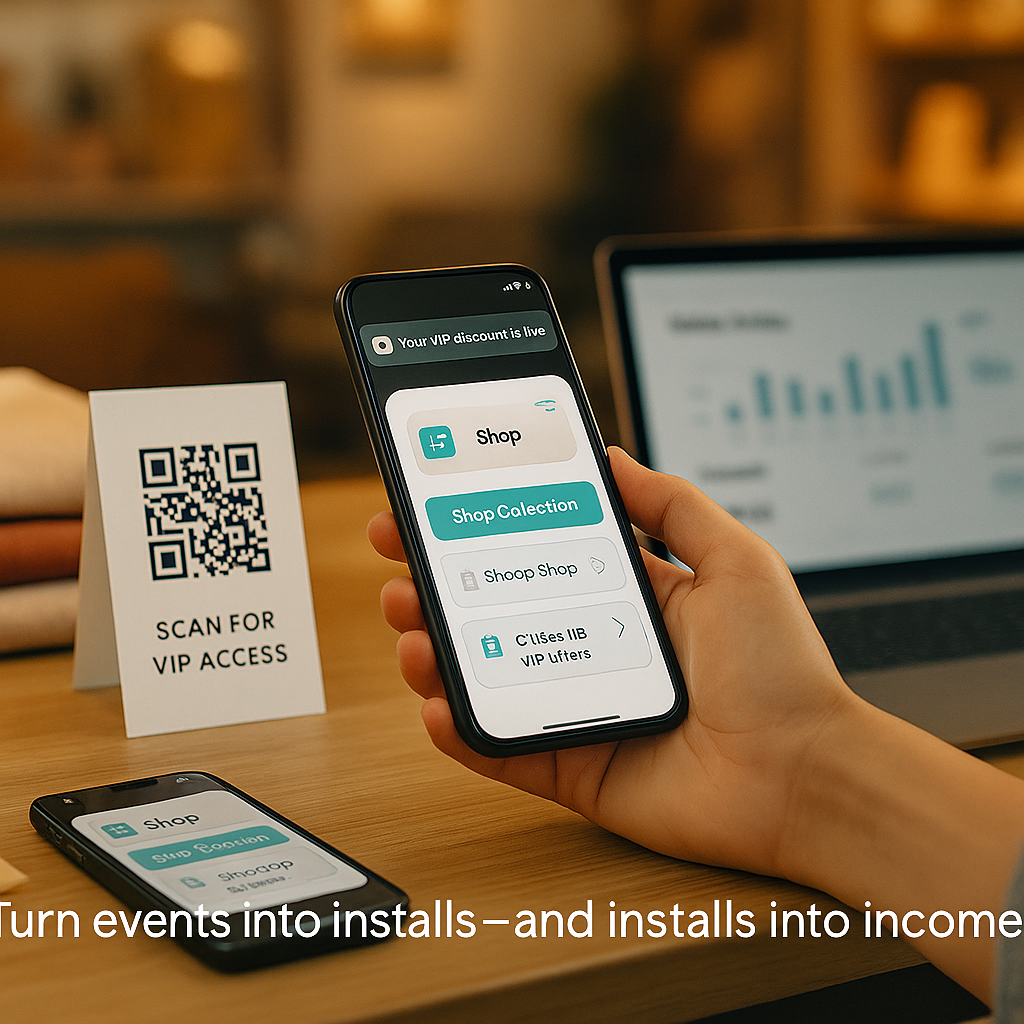 Benchmarks tell us:
- Opt-in can hit the 60–70% range when you offer clear value. (MobiLoud)
- Triggered campaigns (cart, back-in-stock, price drop) can reach CTRs between 5–16%+—far above broadcast norms. (MoEngage)
With a WOWECard PWA, your system could look like:
1. Prospect scans your card at a pop-up shop or event.
2. They install your digital card to their home screen and opt-in for “VIP drops & order updates.”
3. Your card links directly to your mobile-first store.
4. They browse → abandon a cart → your push sequence reminds them with a one-tap return link.
Even if only a small percentage responds to each push, the compounding effect over hundreds of installs is where the revenue shows up.
For restaurants & food service
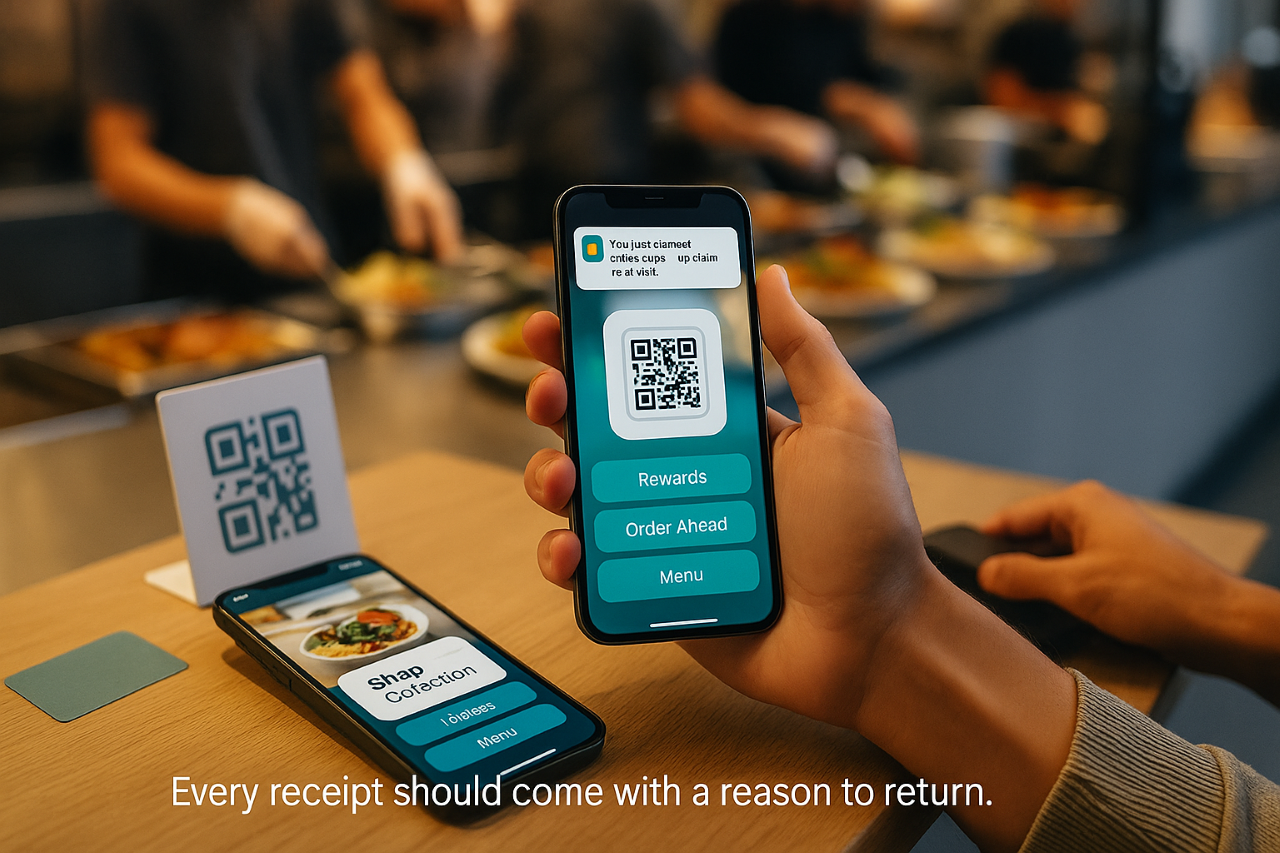 Use push to match the natural rhythm of your customers:
- Lunchtime specials
- “We’re almost booked tonight—last 4 tables left”
- Loyalty milestones (“You’re 1 visit away from a free dessert”)
Because food & drink apps already see strong open behavior and solid opt-ins, you’re operating in a “friendly” vertical for push. (OneSignal)
A WOWECard lets servers, hosts, and owners share a card that doesn’t just sit in a wallet—it becomes a direct line back to your kitchen.
For car dealerships, leasing offices, and realtors
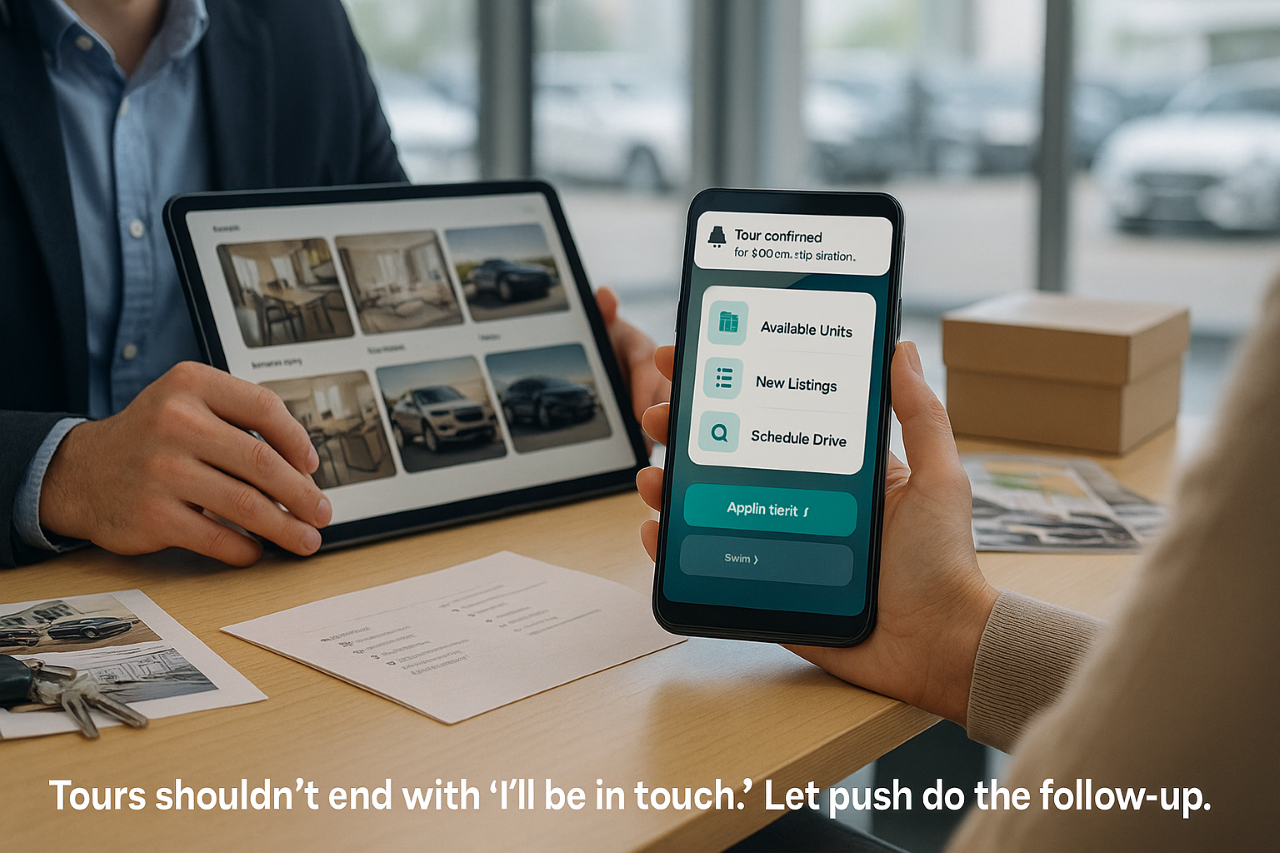 These industries often struggle with follow-through: people tour, collect info, and disappear.
Instead of handing someone a brochure and a paper card, imagine this flow:
1. They scan your WOWECard QR code on your desk sign or yard sign.
2. They install a PWA that includes your listings, walkthrough videos, availability calendar, and “book a visit” button.
3. They opt-in for notifications about “new inventory that matches what I like” or “unit availability alerts.”
4. Your push system sends:
o “New SUV just arrived under your price range—tap to see photos.”
o “Reminder: apartment viewing today at 3:30 PM. Tap for gate code & directions.”
Benchmarks from finance and high-value verticals show that, while CTRs might sit around 2–3%, each click is extremely valuable because of the transaction size. (pushwoosh.com)
For nonprofits and organizations
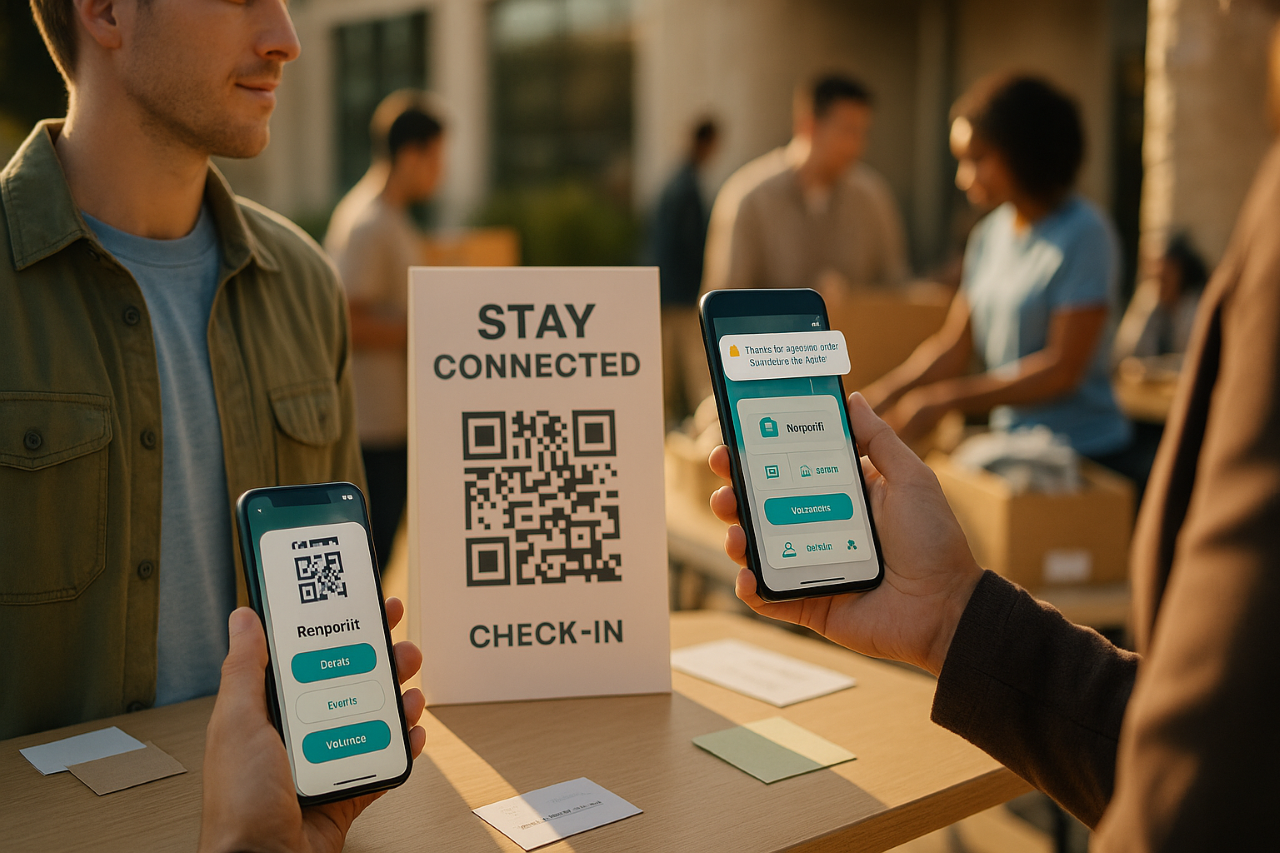 Push here isn’t about hard selling; it’s about relationship:
- Post-event thank-you messages
- Stories of impact (“Your gift helped us serve 37 families this month”)
- Gentle prompts to re-engage or attend the next gathering
With the WOWECard as a PWA “home base,” attendees can install your ministry or organization onto their phones in seconds.
Push notifications then become timely, relational nudges instead of one-off announcements.
5. Why Benchmarks Matter For Your Digital Card Strategy
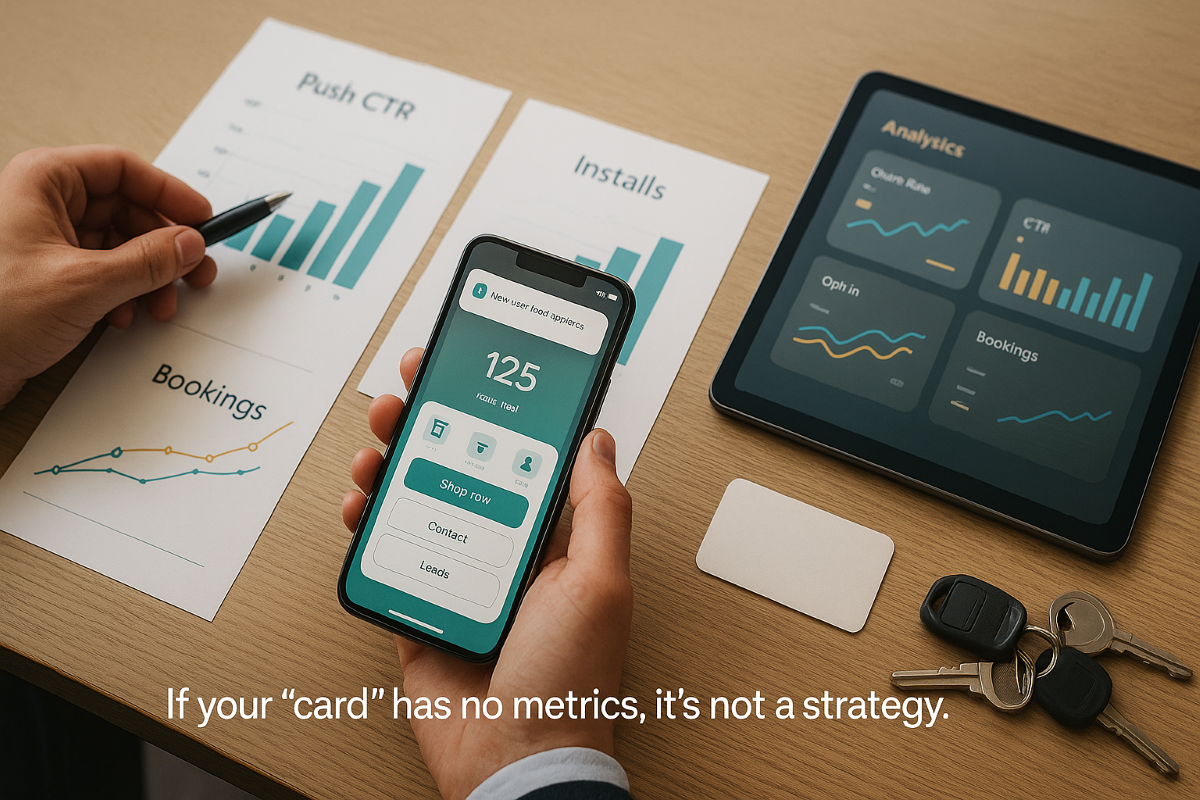 Benchmarks do three important things for you:
1. They calibrate expectations.
You stop chasing fantasy numbers and start planning around realistic opt-in and CTR ranges for your industry.
2. They reveal where you can beat the average.
If the retail broadcast CTR benchmark is around 1–2%, but your triggered flows are hitting 8–10%, you know you’re building the right infrastructure.
3. They justify your shift from paper to PWA.
A paper card has zero opt-ins, zero reaction rate, zero CTR. A WOWECard PWA can be measured, optimized, and tied directly to meetings, tours, bookings, and revenue.
Ready to turn these numbers into a real system?
Everything we’ve talked about here is why we built The WOWECard in the first place: an all-in-one virtual business card PWA that doesn’t just introduce you—it follows up for you.
If you’re tired of forgettable paper handoffs and want a networking tool that matches the benchmarks you’ve just seen, your next step is simple:
Get our eBook that turns your card into a conversion engine!
 This eBook shows you how to use a digital business card to replace forgettable paper business card handoffs with a scan-to-action system that actually converts—powered by a Progressive Web App (PWA) digital business card.
Most guides talk theory. This one gives you micro-funnels, scripts, and checklists you can paste directly into your process. You’ll finish with a live, measurable digital business card that installs to a phone’s home screen and books meetings in under a minute.
If you’re an e-commerce owner, restaurant operator, small business, car dealership, leasing office, nonprofit, realtor, or corporate leader who’s done with static cards and ready for data-driven, benchmark-backed networking…
This eBook is your playbook.
How can a digital business card benefit your industry?